
Who will be the Next Supreme Leader in Iran?
Since it has been confirmed that the Supreme Leader of Iran, Ayatollah Ali Khamenei has been killed in a U.S. airstrike on Feb. 28 there is a leadership crisis happening within the country.
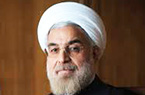
Significant figures are popping back into the spotlight such as former President Hassan Rouhani who served from 2013 to 2021. Former President Rouhani has a doctorate degree in law and he is a veteran of the national-security apparatus, a longtime parliamentarian and a nuclear negotiator.
Another figure that has been mentioned is the son of deceased Supreme Leader Ayatollah Khamenei, Motjaba Khamenei who was supposed to become the next Supreme Leader but there was fear that he would become the next target for Israel and the U.S.
In addition, U.S. President Donald Trump wants to be involved in choosing the next leader of Iran as he has opposed the idea of former Supreme Leader Ali Khamenei`s son Motjaba to lead the country next. He said that the freedom of Iran is at hands and that the U.S. will take down the regime in the country.
Protests have been happening in Iran since January of this year with the former Supreme Leader cracking down on them by ordering execution of protesters by soldiers.
“Anger over the 2022 death of Mahsa Amini, detained for not wearing her mandatory headscarf properly, escalated into demonstrations against social restrictions. In early January, hundreds of thousands marched in cities across the country, many chanting, ‘Death to Khamenei,’”the Associated Press.
In addition, there was a possibility that political activist Reza Pahlavi, the son of the former Shah of Iran, Mohammad Reza Pahlavi, could run again as the next leader of Iran. The former Shah was overthrown and the Pahlavi family has been in exile since the Iranian revolution in 1979.
“Pahlavi, 65, has claimed that he is ‘uniquely placed’ to lead a transitional government and indicated that he would be willing to return to Iran as soon as possible for the first time in 47 years,” BBC reports.
In addition, there are also the Kurdish forces and President Trump has encouraged them to rise for the opposition. They have been in consultation with the U.S. planning out how to attack the security forces in the Western parts of Iran.
According to The Detroit News, “The Iranian Kurdish coalition of groups based on the Iran-Iraq border in the semi-autonomous region of Iraqi Kurdistan has been training to mount such an attack in hopes of weakening the country’s military, as the United States and Israel pound Iranian targets with bombs and missiles.”
Other Kurdish movements are the Kurdistan Freedom Party (PAK) which have the biggest arms forces and then there is the Kurdistan Democratic Party of Iran. Their vice-president Mustafa Mauludi has been waiting for the fall of the Islamic regime as most of his family have been arrested or killed because of his political activities.
Kurdistan has been split between four countries, Iran, Iraq, Syria and Turkey with a history of the people being betrayed and persecuted. There is even a Kurdish saying “we have no friends but the mountains.”
 Paul Singh Portfolio