
South Korea is urging the need for missile defense after the U.S. is moving their defenses to the Middle East due to the ongoing war in Iran. This comes as North Korea fires 10 ballistic missiles into the East Sea (Sea of Japan) reaching 50 miles and flew for about 340 kilometres landing outside Tokyo`s economic zone.
They have one of the fifth most powerful military ranks from 2024 to this year due to advanced technology and rapid fire power. In addition, they have a 600,000-strong active force, 31 million in reserve and a defense budget of 65.8 trillion won or US$44.8 billion as of 2026.
In their arsenal, they have K2 Black Panther tanks in artillery, F-15 and F-35 jets in their air power and used Aegis destroyers in their navy.
In addition, they are also in the top 10 global arms exporters selling advanced aircrafts, tanks and self propelled howitzers. They also have the U.S.-ROK Treaty where 28,500 U.S. troops are stationed in the country.
But they face challenges such as low birth rates which risks long term manpower requiring a shift into automation, drone warfare and Artificial Intelligence.
“South Korea has a relatively high share of military spending to GDP—and rising toward 3.5%. The South Korean military is highly capable, so I would say they are already doing this,” Stephen Haggard, Research Professor at the University of California San Diego, said. “It is partly pressure from Trump, but also a hedge against the uncertainties of Trump’s support for the alliances.”
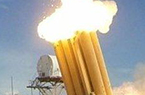
Specifically, the U.S. are transferring their Terminal High-Altitude Area Defense (THAAD) anti-missile batteries from US Forces Korea (USFK) to the Middle East and South Korean media outlets have reported that THAAD launchers are already being transported out of Seongju Airbase, south of Seoul.
THAAD is meant to intercept all short, medium to intermediate-range missiles as they get blasted to shreds. It is great since due to speed and steep trajectory, it is very difficult to destroy ballistic missiles.
According to Technology.Org, “THAAD smashes into an incoming ballistic missile in its terminal phase just as the missile begins its descent towards the target. And it does that with no warhead at all – it is a hit-to-kill system.”
In Guam, they hosted one of eight THAAD missile interceptors maintained by the U.S. army. The Pentagon declined to comment when asked about moving their advanced missile systems from South Korea or Guam and also whether this war would affect the rollout of the anti-missile Guam Defense System.
President Lee Jay Myung has opposed this withdrawal of U.S. weapons. But now South Korea is pressured into taking more financial responsibility for their defense. If the U.S. moves their defenses, it could cause friction between allies.
“There is an ongoing debate—both inside and outside the Republican Party—on the geography of defense deployments,” said Haggard. “These movements underline the challenges of fighting wars in two regions at the same time, and raise questions for those who believe the US should be focused on the Asia-Pacific.”
This could also cause the North to provoke the South with their weakened defense shield with smaller provocations. The South would have to rely on their own less effective high-altitude, long range defense Patriot units and M-SAM II(Cheongung-II).
“This is part of the country’s ongoing missile development program. It also serves as a reminder that North Korean capabilities are robust, the entire war effort in the Middle East justifies Kim Jong Un’s belief in the importance of having a nuclear capability,” Haggard said. “Iran didn’t.”
Other countries like Japan and the Philippines would start questioning their own security guarantees as it could also signal a reduction of commitment in the Indo-Pacific by the U.S. In addition, China would view the reduction of U.S. surveillances in the region as a victory.
Following the latest ballistic missile launches, U.S. President Donald Trump may seek a meeting with Supreme Leader Kim Jong Un since they held summits during Trump`s first term. Their last meeting was at the Demilitarized Zone back in 2019.
THAAD was developed in 1992 by Lockheed Martin after a proposal request back in 1990. In 1995, the first flight test occurred with a series of failures until 1999 calling for redesigns. In 2008, the first battery was delivered to the U.S. which was then deployed to Guam in 2013 and South Korea in 2017.
 Paul Singh Portfolio