
How Ravi Shankar brought the Sitar from the East to the West
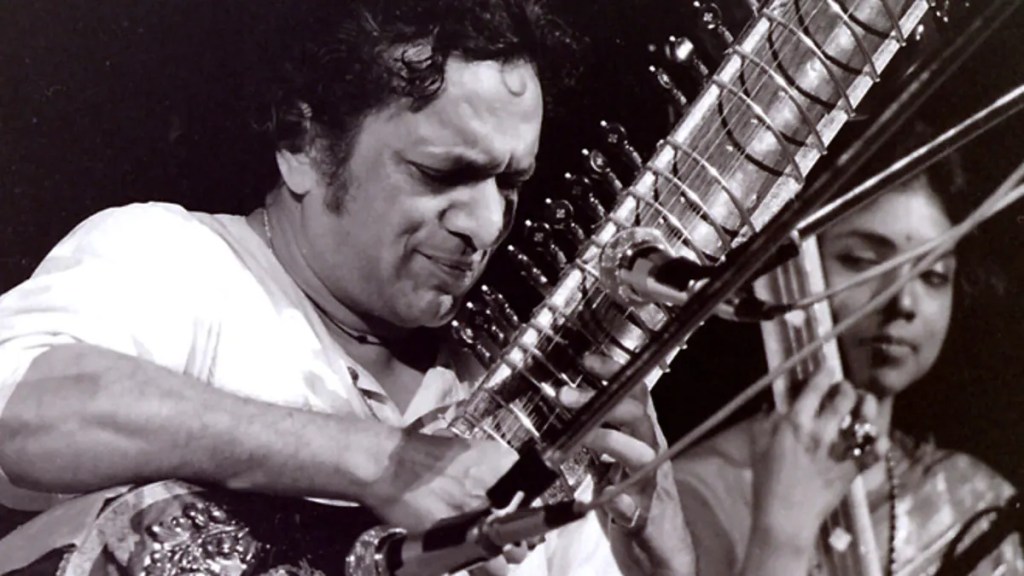
Ravi Shankar, a sitarist from Northern India had made his way from the East to the West by inspiring western musicians with his Hindustani classical music. In 1939, he made his first performance and in 2012, Shankar won five grammys.
But during the 50s and 60s, Americans had associated Indian classical music with rebellion, drugs and the hippie culture and when Shankar did his first concert in the U.S., he was horrified by how high people were and took it as a disrespect to his culture.
During a 1971 interview on The Dick Cavett Show, Shankar expressed how the sound sounds “bizzare” to the western ear and that the sitar that is heard at the pot party or orgy is not the original sound and in fact, the sitar is being played badly.
Shankar had performed live in Woodstock in 1969 with his song Evening Raga which starts off with him playing really fast then moving into a slower pace and then returning to playing really fast.
In 1967, Shankar performed at Monterey Pop which was also known as the “Summer of Love” festival, a rock festival featuring Jimmy Hendrix, The Who, Janis Joplin and Otis Redding. He performed songs that were 20-30 minutes long such as Dhun which was around 18 minutes long.
But his first tour in the west was in 1956 when he started touring the United Kingdom, United States, and Germany ranging from small educational concerts to performing at Carnegie Hall in 1957.
According to BerkeleyBSide, a student-run newspaper from University of California Berkeley, “Indian classical music is a primarily oral tradition that stretches back thousands of years. It is fully intertwined with Hindu spirituality, religion, and history, and has remained highly traditional, almost academic, in its rigidity.”
One musician that Shankar had inspired was George Harrison of The Beatles. Along with The Beatles, he inspired other bands from the 60s British Invasion like The Rolling Stones, saxophonist John Coltrane and The Doors.
Ravi Shankar had taught George Harrison how to play the Sitar. On The Beatles’ 1965 album Rubber Soul, a sitar was used in Norwegian Wood. The sitar can be first heard within ten seconds of the song. It also feels that Harrison might have strummed chords on the sitar like a guitar.
Another Beatle song that the sitar can be heard on is Tomorrow Never Knows from their 1966 album Revolver. Throughout the whole song, there is a deep sitar note that is played throughout the whole song.
The sitar was used in Love You To from the Revolver album in 1966 and Within You Without You from the 1967 album Sgt. Pepper’s Lonely Hearts.
Furthermore, the song Within You Without You, was inspired by a 30 to 40 minute unnamed composition by Shankar on All India Radio that Harrison condensed into a much shorter composition.
The composition can be heard at the beginning of the song along with Indian drums called the Tabla. The song also shares similarities in one of Shankar`s composition, Morning Raga.
This had also got The Beatles interested in Indian culture, meditation and yoga. In February 1968, they went on a trip to India to learn transcendental meditation from Maharishi Mahesh Yogi. While The Beatles were in Rishikesh, George Harrison sat with Shankar to learn the sitar.
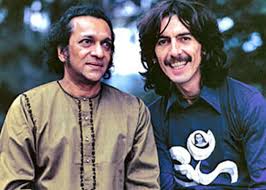
After the Beatles split up in 1970, George Harrison and Ravi Shankar had a very close friendship. They collaborated on concerts such as the Concert for Bangladesh in 1971.
Harrison produced Shankar`s album Shankar Family & Friends between 1973 and 1974 and Ravi Shankar`s Musical Festival from India in 1976 on Harrison`s record label Dark Horse Records.
Shankar and Harrison`s friendship lasted for 35 years before Harrison passed away in 2001 from cancer.
Moving on to The Rolling Stones, in the song Paint It Black in 1966, the guitarist Brian Jones was also inspired to learn the sitar resulting in that melodic sitar line.
Saxophonist John Coltrane had been studying raga music by Shankar and using emotional nuances, structure and microtones into his own work.
Coltrane had a concept that used a “drone” which is a continuous, sustained or repeated tonal center that acts as a foundational unchanging backdrop for melodic improvisation.
Coltrane had also used a pedal point in his compositions. This is when a repeated bass note held while harmonies in the upper voice change, creating tension, harmonic and modal stability. In his 14 minute song India, part of the intro sounds like some kind of Indian flute is being played instead of a saxophone.
In a song by The Doors, The End, Robby Krieger is mimicking the sound of the sitar with his guitar such as the warbling and “drone” sound.
 Paul Singh Portfolio