
Ex-President Yoon Suk-Yeol Resists Arrest Regarding Declaring Martial Law
By Paul Singh
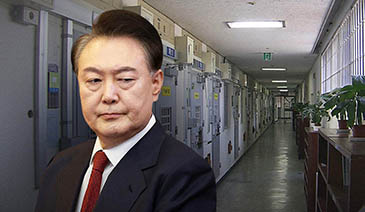
A warrant has been issued for the arrest of former President Yoon Suk-Yeol. When he was about to be questioned, he resisted by stripping to his underwear.
According to The Straits Times, Singapore`s biggest newspaper, “South Korea’s impeached former president Yoon Suk-Yeol lay on his prison cell floor in his underwear to resist attempts to interrogate him, prosecutors said on Aug 1.”
The Times of India reports that Former President Yoon was in an undershirt and boxer briefs.
The arrest warrant was issued due to a possibility that Yoon could obstruct justice by destroying evidence. “Seoul Western District Court later granted a formal arrest warrant, citing concerns by investigators that he could destroy evidence.
The decision triggered a riot by his supporters,” according to the Associated Press report.
According to The Korea Herald, “If Yoon is brought in for questioning after he arrested, it will mark the former president’s first public appearance since July 10, when he was taken into custody at the Seoul Detention Center over evidence-tampering concerns. He has since refused to attend either special counsel summonses or criminal hearings.”
After the special counsel team, led by Cho Eun-Suk, failed to arrest the former president multiple times, they`re pressuring him by investigating his wife, former First Lady Kim Keon-Hee, The Korea Herald reports.
“On Friday, the team investigating former First Lady Kim Keon-Hee and led by prosecutor Min Joong-Ki attempted to detain Yoon at Seoul Detention Center at around 8:30 a.m. They left empty-handed after more than two hours of confrontation.”
One of Former President Yoon`s loudest critics is members of the opposing party. “Park Chan-Dae, the floor leader of the main opposition Democratic Party, has criticized Yoon for not upholding his promise to take legal and political responsibility for his botched martial law attempt,” BBC reports.
Other politicians, such as Justice Minister Chung Sung-Ho, condemn Yoon`s conduct.
Chung had described Yoon`s refusal to be arrested “an act worse than that of gangsters,” Chosun Biz reports.
When Yoon Suk-Yeol declared martial law on Dec. 3, 2024, it led to his impeachment 10 days later. Then he had an arrest warrant from Dec. 30, 2024 to Jan. 15 with two failed attempts to bring him in.
According to France24, “Yoon was arrested after he tried to impose martial law on December 3, sending troops to parliament to prevent lawmakers from voting down his declaration and plunging the country into political turmoil.”
CNN reports that “Cho’s team indicted Yoon on abuse of power that obstructed the rights of some of his Cabinet members. The charge was imposed because Yoon summoned only select Cabinet members to approve his emergency martial law when South Korean law requires approval of all Cabinet members for such a measure, Park Ji-Young, a senior investigator at Cho’s team, told a briefing.”
He refused to appear in three court summons by the Corruption Investigation Office for High Ranking Officials (CIO).
What is martial law? “South Korea’s constitution gives the president the power to use the military to keep order in “wartime, war-like situations or other comparable national emergency states.” Martial law powers can include suspending civil rights such as freedom of the press and assembly and temporarily limiting the powers of the courts and government agencies,” the AP states.
During martial law, Yoon banned political activities, restricted media and publications, banned strikes and social disruptions and issued a return to work order for medical personnel. Violating martial law would lead to arrests without warrants.
Moreover, there were also protests against Yoon after martial law was reversed leading to clashes between protesters and security forces.
But martial law did not last long because according to Reuters, “In just a few frantic hours, lawmakers were forced to climb the walls into the National Assembly compound in order to lift the martial law decree after being blocked by military troops and police.”
Martial law was first used after the Korean War during the rebuilding of South Korea to prevent anti-government demonstrations by stationing soldiers, placing tanks and armored vehicles in streets and public places during 1950-53.
In 1961, there was a military coup led by Army Gen. Park Chung-hee. Then in 1979, Maj. Gen. Choo Doo-Hwan led tanks and troops into Seoul but was assassinated by his spy chief.
 Paul Singh Portfolio