
With AI tools available and affordable, musicians now compete with machines

TIMELESS FIGHT AI music may be a hot new thing, but what’s not new is artists’ struggles to make a living from their craft. Courtesy of Gorodenkoff Shutterstock
High-quality artificial intelligence has spared no industry. In a creative space like music, these days, generating a song only takes typing in a prompt.
But this magic and power comes with controversy. Using AI in music has created a new form of intellectual property theft from AI clones mimicking artists’ vocal features and musical styles.
The Bay Area is a major hub for the tech industry, with its 3,300 AI startups and nearly 130 AI companies that specialize in media and entertainment, according to Tracxn, a global market intelligence company in over 50 countries.
Apps like Suno, originally from Massachusetts, specialize in generating music prompts. They opened up an office in San Francisco last month, looking to expand their presence and recruit skilled workers.
Another app called Kits AI focuses on AI voice cloning, bending and changing, AI mastering, AI instrument library, vocal remover, text-to-speech, voice designer, and instant voice cloning. Founded in 2021, it’s used by over 7 million artists, music producers, songwriters, content creators, and others.
Udio, a major AI music generator, switched to licensed remixing due to intense copyright infringement lawsuits from major record labels.

PLATFORM NEUTRALITY Spotify has assigned the responsibility for disclosing AI use to artists. Courtesy of TSViPhoto Shutterstock
Chris Ansuini is a musician from Livermore, Calif., and is the current owner of Seeds of Music Academy in Pleasanton. He said it’s already complicated being a musician in the Bay Area, with rent and costs being exorbitantly high, which creates a bitterness among artists toward the tech industry.
“If some of these businesses are doing work to take away work for musicians, that definitely doesn’t feel good,” Ansuini said. “But it also seems par for the course.”
However, not all apps specialize in generating AI music. With the rise of technology stealing sound, beats, rhythm, and other aspects that make songs unique, some are supposed to detect it, such as SoundPatrol.
SoundPatrol spots copyright infringement in AI-generated music and audio content by analyzing vocal identities and music semantics.
The big music streaming companies are addressing AI in music creation as well. In a move for transparency, last month Spotify put the responsibility on artists to voluntarily disclose AI use in song credits and metadata. However, Spotify is not mandating AI labels.
Apple Music, by comparison, requires AI involvement to be disclosed in metadata at delivery.
Another musician, Pablo A. Puente from El Cerrito, Calif., worked for the East Bay Center for the Performing Arts. He feels that AI in music downgrades the quality for artists and listeners.
“I think maybe people who don’t understand music or who struggle to make music, maybe feel like they need a tool to fill in the parts where they don’t have training, or they don’t understand music,” Puente said.
“When you look at AI, you’re having something created for you,” Puente said. “You’re not creating, you’re having something generated.”
He added, “There’s no part of it that engaged me in any meaningful way. It’s like music that’s also at the same time incomplete,” since there is no story behind the music, like the storytelling artists use to express themselves.
Nicole Cooper, a vocal instructor at Park Avenue Music Center in San Jose, said that to a musician’s ear, AI music will always sound false.
“It doesn’t have the same emotional content because it is a copy of emotion,” Cooper said. “It’s not the real person expressing what they wrote.”
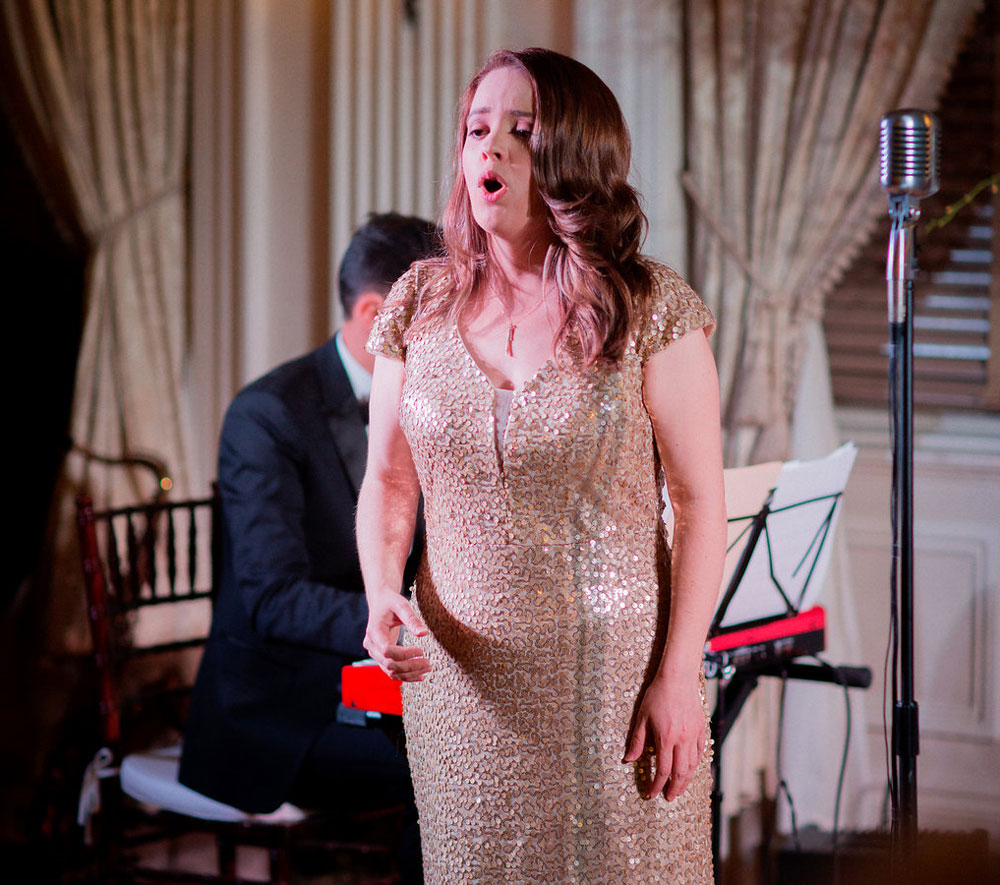
SYNTHETIC VERACITY Vocal instructor Nicole Cooper believes AI music will never embody the emotional authenticity as human-created music. Courtesy of Nicole Cooper
A music student at San Francisco State University (SFSU), Luc Chasse, said that as a musician, it’s very hard to make money touring, but it still has meaning.
“Maybe they make 20 bucks a show or something,” Chasse said. “But at least it’s real life, at least it’s based in human empowerment.”
Chasse added, “It’s like the music equivalent of poison”—referring to The Velvet Sundown, an AI band specializing in ‘70s-style rock that came out last year and released multiple albums rapidly. “It’s because it’s not only bad music, but the effects of it are inhumane.”
Meanwhile, Ricardo Silvestri, a guitarist and real estate agent in San Jose, said the band’s music “didn’t sound bad.”
“I feel nothing because I heard Velvet [Sundown],” Silvestri said. “I actually like it. Some of it’s pretty good. It sounds very psychedelic.” But he admits some parts could be improved.
The AI music boom can also affect music stores as well. Ethan Lee, manager of Subway Guitars in Berkeley, said that if culture becomes too obsessed with passive digital consumption, it will affect music instrument businesses and artists.
“People would cease to value acquiring these objects, maintaining them, making their own music, throwing themselves into the pursuit of music,” said Lee. “In theory, that is a risk of people seeing music as a completely disposable commodity that is not worth paying for, slash paying individual artists.”
In March, independent musicians sued Google for copyright violations involving music generated by AI, claiming that Google operates AI music products, such as Producer AI and Lyria 3, which allow users to create complete songs, refine lyrics and melodies, among other things, via chat.
Those products can do that because they copied millions of copyrighted works, removed the copyright management information (CMI), and redistributed them on platforms like YouTube.
Saxophonist and composer Francis Wong, who is also a professor at SFSU, said that it is outright stealing and that there should be a use fee.
“That’s what’s crazy about this AI thing is that it could be millions and millions of plays, right?” Wong said. “So I think that’s where the monitoring part also comes in.”
In addition, Cooper, the vocal instructor in San Jose, also remembers an interview about a woman who played the banjo and discovered that songs that had been in her family for generations were copyrighted by a group. Later on, they sued her.
The woman was Murphy Campbell, an Appalachian folk singer-songwriter from North Carolina. According to Music Business Worldwide, in January, Campbell noticed that AI-generated covers of her songs featuring her voice and style were uploaded onto Spotify and other platforms without her consent.
Campbell suspects that “someone had scraped her YouTube performances, run them through AI voice-cloning tools, and uploaded the results to streaming platforms under her name.”
In late March, “a series of videos were uploaded to YouTube through Vydia [a music distribution company] by an individual using the name ‘Murphy Rider’… and filed ownership claims against several of Campbell’s legitimate YouTube videos via the platform’s Content ID system.”
Cooper said, “To have your material taken from you and then to get sued backwards for it—that is quite astounding.”
Although there’s no clean resolution yet, Campbell and Vydia are currently sharing revenues from her work.
On the other side of the argument, AI can have a positive impact on music if tools are used appropriately.
“Maybe people can write more pieces and produce more pieces in a year than they previously would have been able to,” said Ansuini. “But you know, that creates a new demand.”
Some musicians have used AI for creativity, not for replacement. One of them is Patrick Lew Hayashi, a San Francisco musician, who admitted to using AI tools for his music projects.
“I admit wholeheartedly with the music I do on the internet that I do use AI-assisted tools to create some of the music or the backing tracks in the elements of Lewnatic’s music,” Hayashi said. “The music I do after Patrick Lew Band, of course.”
Despite the potential usefulness of AI, there are still artists who place a higher value on human creativity.
“Well, I think it’s very hard to make a song,” said Chasse. “As a musician, I try really hard to make original songs. So when I see that people are kind of relying on something that isn’t themselves to make something, then it’s frustrating because I’m trying really hard to make something my own, and someone else is just like not doing that.”
Puente, the musician from El Cerrito, could relate to Chasse with his time and effort writing the song, “How Do You Write?”
“I had that first chunk, and sometimes I’ll write like, okay, I get the A and B chorus, I got a verse and a chorus,” Puente said. “Then once that’s done, I’m trying to figure out the second chorus, and the words keep changing over time.” He explained that the song took him a few months, because he was trying to find the right ending.
Chasse encourages the public to support musicians.
“Go to shows, go to The Warfield, go to the freaking Great American Music Hall because then those musicians will feel more like, ‘Okay, I’m doing a good thing, I want to keep doing this,’” Chasse said.
 Paul Singh Portfolio