
1st Kenyan Ambassador to Seoul Ngovi Kitau Lays Foundation between Kenya and S. Korea
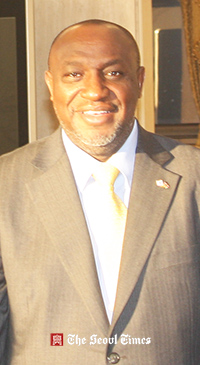
Mr. Ngovi Kitau, the first Kenyan ambassador to S. Korea
Ngovi Kitau served as the first resident ambassador of Kenya to Seoul from 2009 to 2014. While he was serving as the Kenyan ambassador to South Korea, he was influential in establishing the Kenyan Embassy in Seoul.
Kitau`s primary focus was helping secure several bilateral treaties, trade, economic diplomacy and cultural exchange. He has been involved in Swan Carriers Ltd and to bridge investment and trade ties between Kenya and South Korea, he championed initiatives like the Korean Business Center in Nairobi.
According to Africantopstories.co.ke, “Ambassador Ngovi Kitau is a revolutionary Kenyan leader who has served Kenya in many different sectors. He is admired by many for his exemplary character and leadership abilities. Having worked in different sectors including but not limited to being an ambassador. Mr. Kitau today is one of the founders of Premier Milk, one of the best dairy products in Kenya.”
The former ambassador was questioning why a relationship of 1964 had not matured and what needed to be done. He was a pioneer of Kenya`s Look East Policy that was anchored on Economic Diplomacy.
This policy was inspired by former Kenyan President Mwai Kibaki who was a renowned economist. The process for this policy started out in the 1990s as he had institutionalized the policy.
“Kenya`s ‘Look East Policy’ was a very important economic and development strategy. It was inspired by two main factors. The first was the admiration of Asia`s rapid industrialization, especially in countries like South Korea, which at one time borrowed 10,000 US dollars from Kenya, and repaid in two years.” Kitau said.
After the Cold War collapsed in 1991, Kenya`s economic development changed and faced ridicule from Western countries along with other poor African countries.
Furthermore, Western countries tied development aid and cooperation to unpractical western values of democracy, government and human rights.
Specifically they demanded obsequiousness, which is the excessive eagerness to please, obey or flatter in order to win favor from someone in the position of power, rather than autarky, a national policy or economic system built on self-sufficiency.
Former Ambassador Kitau remembers a U.S. Ambassador to Kenya issuing ultimatums to Kenya while the European ambassadors cheered.
“This was an abomination. In consequence, this disrespect strained relations, and Kenya was forced to diversify its diplomatic, economic and development partnerships, beyond former colonizers and traditional Western allies,” said Kitau.
Furthermore, the former ambassador continues to be a prominent voice in Kenyan foreign policy. He frequently contributes articles and commentary on economic diplomacy, international trade and regional peace.
“My time in Seoul was great, revealing and inspiring. I learned a lot about Korea’s rapid development and how Korea as a middle power can be a voice for Africa at the global arena,” former Ambassador Kitau said.
Since former Ambassador Kitau is a geopolitical analyst, he has the credibility, thought leadership and visibility to articulate core foreign policies. He has full knowledge of Kenya`s Vision 2030, African Union (AU) blueprint, East Africa Community (EAC) Vision 2050 and Agenda 2063.
“I have a repertoire of knowledge on the integration of Africa, through the approved 8 economic communities, African peace processes, regional infrastructure integration, trade corridors, and African economic trends,” Kitau said. “This knowledge is essential to becoming a prominent voice for the Kenyan foreign policy.”
Some challenges that the former ambassador faced were cultural barriers and language as official meetings were conducted in Korean when there were participants who were also fluent in English.
“I remember an amusing incident where a senior government officer, who had presented his narration in Korean, had to correct the Korean English translator, after an incorrect translation,” Kitau added.
There were also some issues with etiquette when former Ambassador Kitau accompanied Kenyan delegations to official engagements.
“Kenyans are not cognizant of deep bowing, excessive politeness, great respect for elders, speaking softly when using cellphone in a restaurant or public service vehicles, removing shoes when entering a restaurant, or sitting on the floor while taking a meal,” said Kitau.
Former Ambassador Kitau faced racial profiling. Back in 2014, at Incheon International Airport after he was detained along with the former Nigerian Ambassador to Seoul Desmond Akawor for 30 minutes after passing through immigration after arriving back from Doha via Qatar Airlines.
But he was taken out of line, asked to step to one side and had his passport confiscated from him. After they were pulled aside, their laptops were scanned and searched. This was due to an African man entering South Korea with a Kenyan passport. From a neighboring country, he admitted to illegally buying it and traveled to Malaysia.
The man was advised to destroy the passport upon arrival to South Korea as his country did not have an embassy and he could be granted the status of a political refugee.
“This unfortunate incident was unpalatable. We saw it as discrimination and racial profiling. The action was unwarranted because we were invited to Korea for business major Chaebol, and the Embassy had granted us a visa after due diligence.” Kitau said.
The former ambassador mentions that there are many incidents where citizens from poor African countries visit South Korea and decide to seek asylum out of the blue.
Moving forward, Kitau suggests that now it is time to transform the “Look East Policy” to “Act East Policy” to grow the friendly bilateral relations to a comprehensive economic and all-weather strategic partnership.
In addition, this partnership should focus on design and development of industries in rural Kenya and investments in capital intensive manufacturing, green field projects, joint ventures and strengthening of digital and innovation cooperation in Artificial Intelligence.
“Through this partnership, Kenya would offer the ROK safe and sustainable access to African market via African Continental Free Trade Area (AfCFTA), strong and reliable logistics infrastructure, diplomatic influence, and a talented young workforce,” said Kitau.
There are about 300 to 400 Kenyans living in South Korea out of a population of 51.7 million people. Most of them are students, researchers, consultants and IT professionals rather than manual laborers.
 Paul Singh Portfolio